Learning Experience Architect
Learning Experience Architect
Virtual Guided Training
Selected Projects & Methodology
Blending instructional design, cognitive principles, and immersive technology to create engaging learning experiences that move learners from knowledge to performance.
Case Studies

Workforce Development Virtual Reality Training
An enterprise-scale virtual reality training program that transforms pre-apprentice electrician instruction into guided, hands-on practice. Through realistic simulations, interactive task performance, and immediate feedback, the experience reinforces skill retention and helps prepare learners for certification, continued training, and future employment.
Augmented Reality Engine Assembly Training & Job Aid
An augmented reality training program designed to bridge learning and on-the-job performance. Learners use realistic 3D models and guided interactions to practice complex maintenance and assembly procedures before working with real equipment, then access the same experience as step-by-step support during live tasks. The result is stronger preparation, fewer errors, and more consistent production performance.

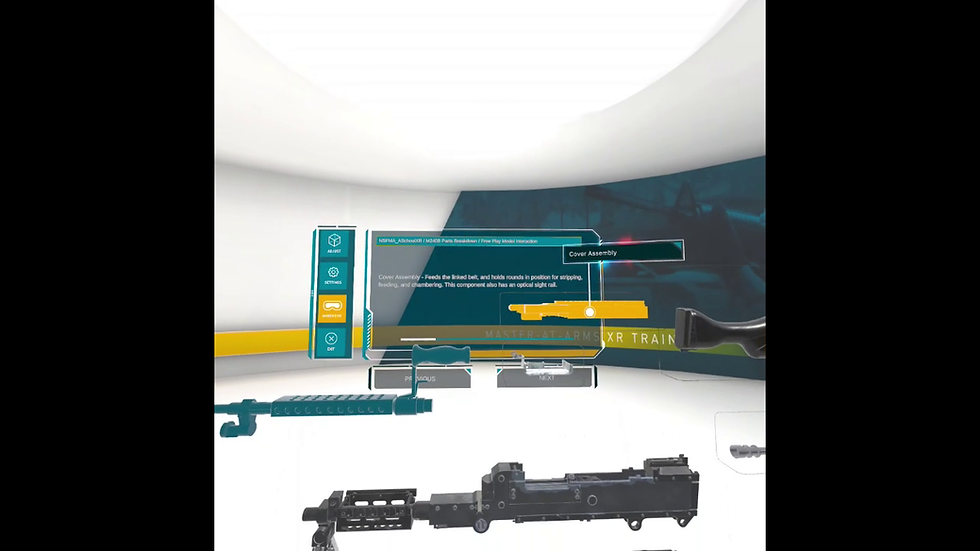
Immersive Training for Complex Systems
An immersive virtual reality training program designed to reinforce classroom instruction by transforming previously learned concepts into hands-on practice. Learners move from interactive slide-based instruction into a realistic 3D environment where they can rehearse step-by-step maintenance procedures using equipment that may not be readily available in the classroom. The experience provides a more authentic test of procedural knowledge while increasing engagement, strengthening retention, and giving learners meaningful practice beyond traditional slide-based instruction.
Immersive Life-Saving Skills Training

An augmented reality training experience designed to make lifesaving procedure training more interactive, immersive, and practice-focused. Learners use realistic 3D models and guided rehearsal to apply procedural knowledge, make decisions, and practice responses in a simulated environment. By moving beyond passive instruction, the experience strengthens engagement, reinforces procedural recall, and gives learners a more active way to prepare for real-world situations.